Earn your turns
Earn your turns
Reading time: 10 minutes
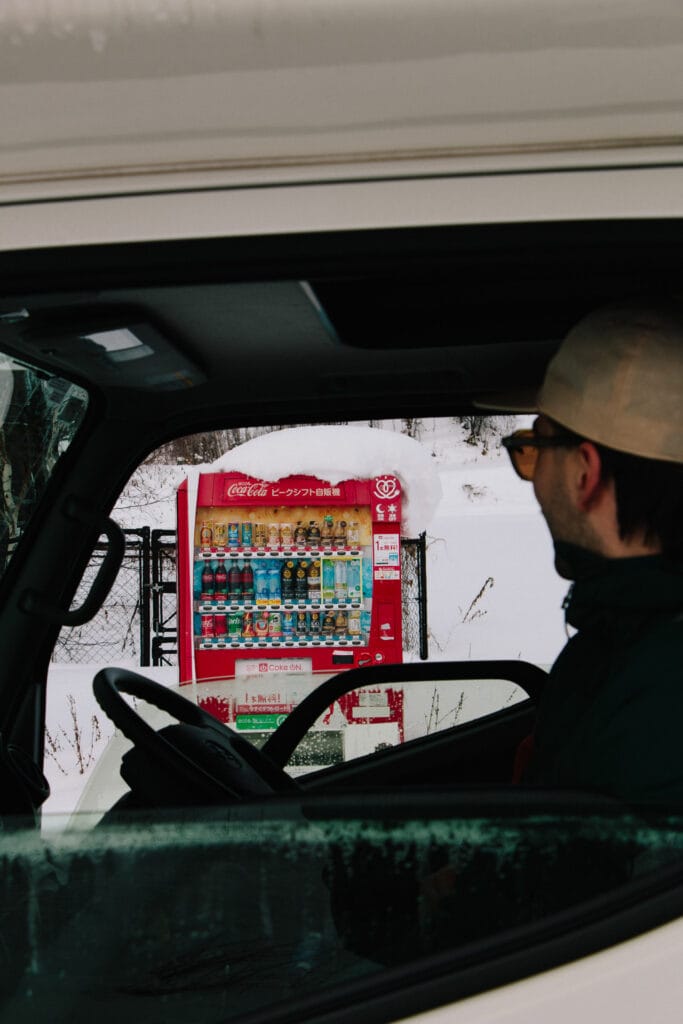
Yes, Japan is enchanting; it’s a dream destination. Elements as seemingly ordinary as yet another bright red vending machine or a small, traditional ramen restaurant are, all by themselves, enough to motivate millions to travel the entire globe and set foot on Japanese soil.
But not us. At least, not primarily.
Yes, Japan is enchanting; it’s a dream destination. Elements as seemingly ordinary as yet another bright red vending machine or a small, traditional ramen restaurant are, all by themselves, enough to motivate millions to travel the entire globe and set foot on Japanese soil.
But not us. At least, not primarily.
If we went there, it was to fulfill a specific dream: to taste the soft flakes of the mythical Japow*.
And if the idea of experiencing it has ever crossed your mind, stick with me. I’ll outline a typical day of touring on Hokkaido*. Spoiler alert: you can go ahead and open Google Flights—you might need it in about ten minutes.
Words marked with an asterisk are defined in the glossary at the end.
If we went there, it was to fulfill a specific dream: to taste the soft flakes of the mythical Japow*.
And if the idea of experiencing it has ever crossed your mind, stick with me. I’ll outline a typical day of touring on Hokkaido*. Spoiler alert: you can go ahead and open Google Flights—you might need it in about ten minutes.
Words marked with an asterisk are defined in the glossary at the end.
Planning the Night Before
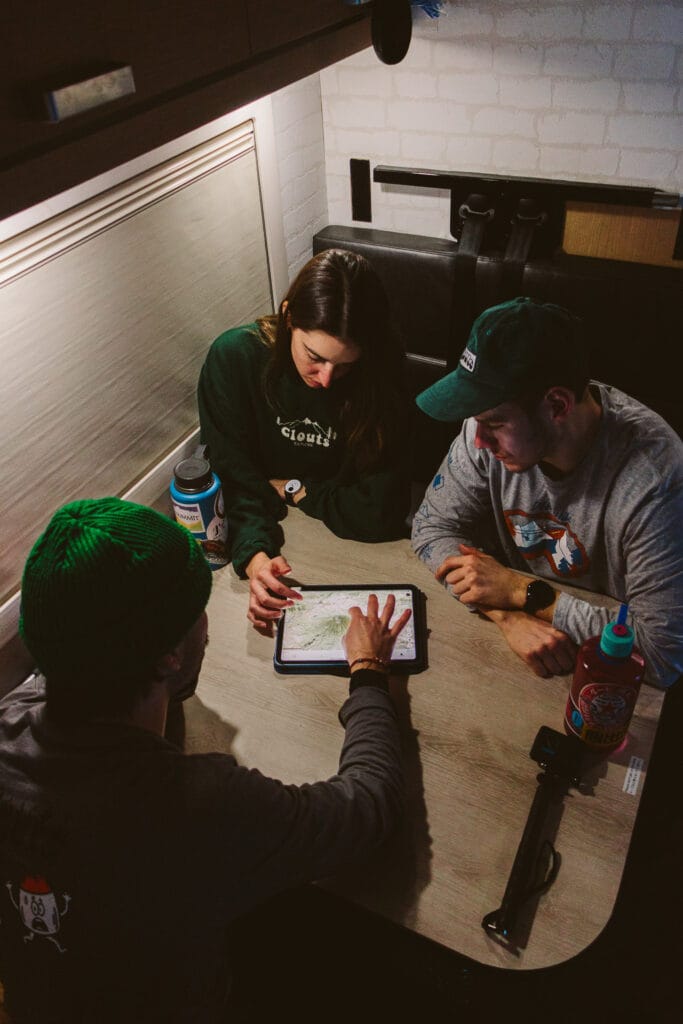
Let’s imagine ourselves in a cubic Japanese camper in northern Hokkaido, parked in the lot of a michi-no-eki*. Everyone has a full belly from a thoroughly satisfying meal and a restorative onsen* session. Even though the temptation to crash out in our big hoodies is strong, there is still one crucial step before we call it a day: planning our touring day for tomorrow.
You have to understand that we were going to find ourselves without markers or signs—just the real backcountry. It is in this context that preparation truly matters: choosing the most inspiring mountain, planning the route, and preparing everything to be self-sufficient at altitude. The night before, in this small, heated cabin, we weren’t just planning: we were already projecting ourselves into the adventure.
This planning relied on several digital tools. I’ve left you two checklists at the very end: one comprised of these necessary tools for touring in Japan (Hokkaido Wilds, Windy, Japan Avalanche Network, and OnX Backcountry), and the other composed of equipment to make sure you have with you.
Not gonna lie, you’d be crazy to go without them.
Planning the Night Before
Let’s imagine ourselves in a cubic Japanese camper in northern Hokkaido, parked in the lot of a michi-no-eki*. Everyone has a full belly from a thoroughly satisfying meal and a restorative onsen* session. Even though the temptation to crash out in our big hoodies is strong, there is still one crucial step before we call it a day: planning our touring day for tomorrow.
You have to understand that we were going to find ourselves without markers or signs—just the real backcountry. It is in this context that preparation truly matters: choosing the most inspiring mountain, planning the route, and preparing everything to be self-sufficient at altitude. The night before, in this small, heated cabin, we weren’t just planning: we were already projecting ourselves into the adventure.
This planning relied on several digital tools. I’ve left you two checklists at the very end: one comprised of these necessary tools for touring in Japan (Hokkaido Wilds, Windy, Japan Avalanche Network, and OnX Backcountry), and the other composed of equipment to make sure you have with you.
Not gonna lie, you’d be crazy to go without them.
he final choice of the mountain and the segment that would be exploited depended on a number of factors, notably our appetite for adventure. Basically, we had to ask ourselves if we were looking for a physical challenge with a significant ascent (e.g.., Mount Yotei), or rather a not-too-long mountain segment to lap that would allow us to take full advantage of the deep powder and pillows (e.g., Kiroro).To be honest, the second option won out the vast majority of the time, in order to benefit from this snow that is unique in the world. Because yes, there are interesting high peaks, but altitude often comes with the compromise of packed, wind-affected, and therefore less interesting snow.
By the way, these two mountains are in the Niseko region. This area, the Japanese Whistler, is extraordinary, but it would be a mistake to limit yourself to it! Like Western Canada, I would definitely recommend going outside the most touristy areas to taste the best of what the place has to offer. Around Asahikawa, several regions north of Sapporo are absolutely legendary and shouldn’t be missed.
On average, about a good hour of research, debating, and deliberation was enough before we felt confident about the mountain, the slope, and the route that would be taken. It’s 9:30 PM, time to go to bed!
he final choice of the mountain and the segment that would be exploited depended on a number of factors, notably our appetite for adventure. Basically, we had to ask ourselves if we were looking for a physical challenge with a significant ascent (e.g.., Mount Yotei), or rather a not-too-long mountain segment to lap that would allow us to take full advantage of the deep powder and pillows (e.g., Kiroro).To be honest, the second option won out the vast majority of the time, in order to benefit from this snow that is unique in the world. Because yes, there are interesting high peaks, but altitude often comes with the compromise of packed, wind-affected, and therefore less interesting snow.
By the way, these two mountains are in the Niseko region. This area, the Japanese Whistler, is extraordinary, but it would be a mistake to limit yourself to it! Like Western Canada, I would definitely recommend going outside the most touristy areas to taste the best of what the place has to offer. Around Asahikawa, several regions north of Sapporo are absolutely legendary and shouldn’t be missed.
On average, about a good hour of research, debating, and deliberation was enough before we felt confident about the mountain, the slope, and the route that would be taken. It’s 9:30 PM, time to go to bed!
Morning Set-up
Sleeping in a camper also means knowing how to be patient when waking up; everyone has to wait their turn to start their little morning routine. As the happy owner of the sofa-bed-table, I was the first to get up and start my breakfast. The latter, according to my travel companions, too often consisted of sardines and imitation crab.
Morning Set-up
Sleeping in a camper also means knowing how to be patient when waking up; everyone has to wait their turn to start their little morning routine. As the happy owner of the sofa-bed-table, I was the first to get up and start my breakfast. The latter, according to my travel companions, too often consisted of sardines and imitation crab.
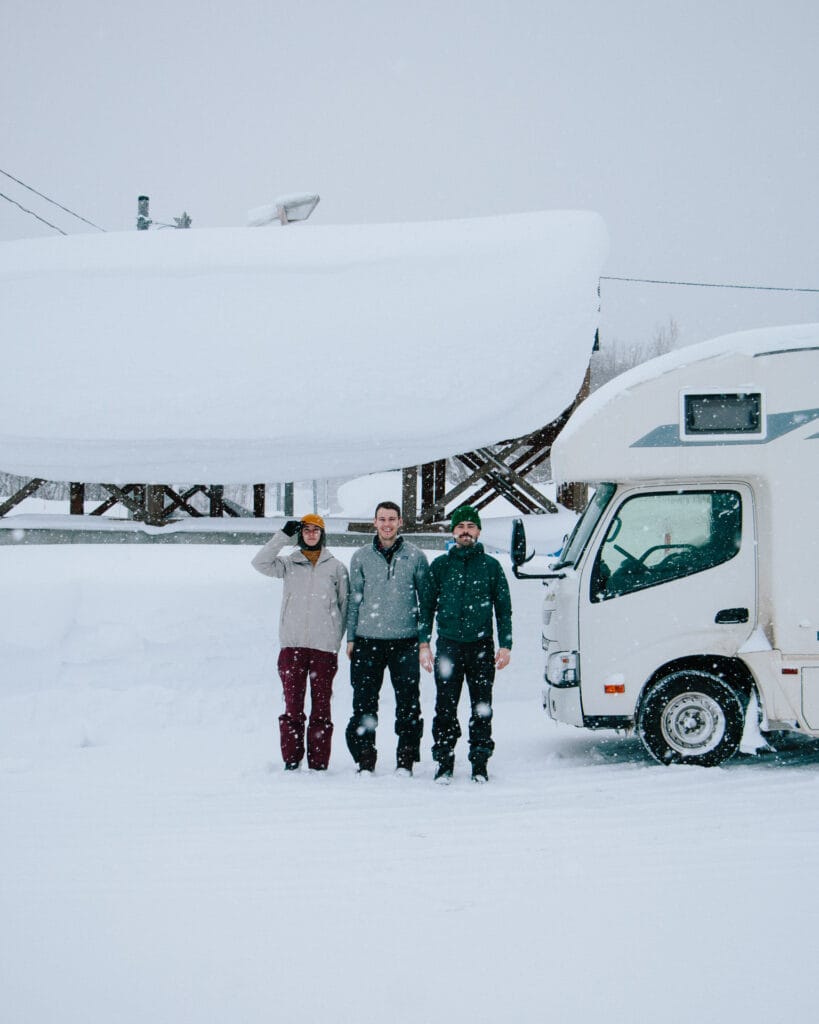
After breakfast came the following steps, in order or not, depending on whether you are the passenger princess or the driver:
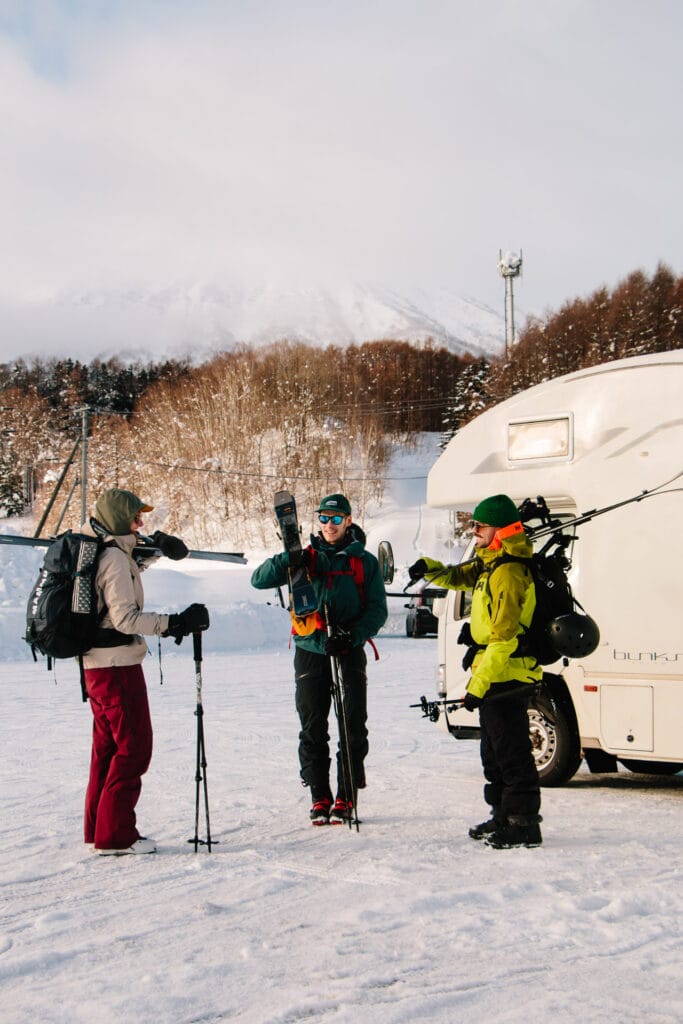
1. Prepare the equipment (another checklist is offered below—I really spoiled you!)
2. Fill the food bag
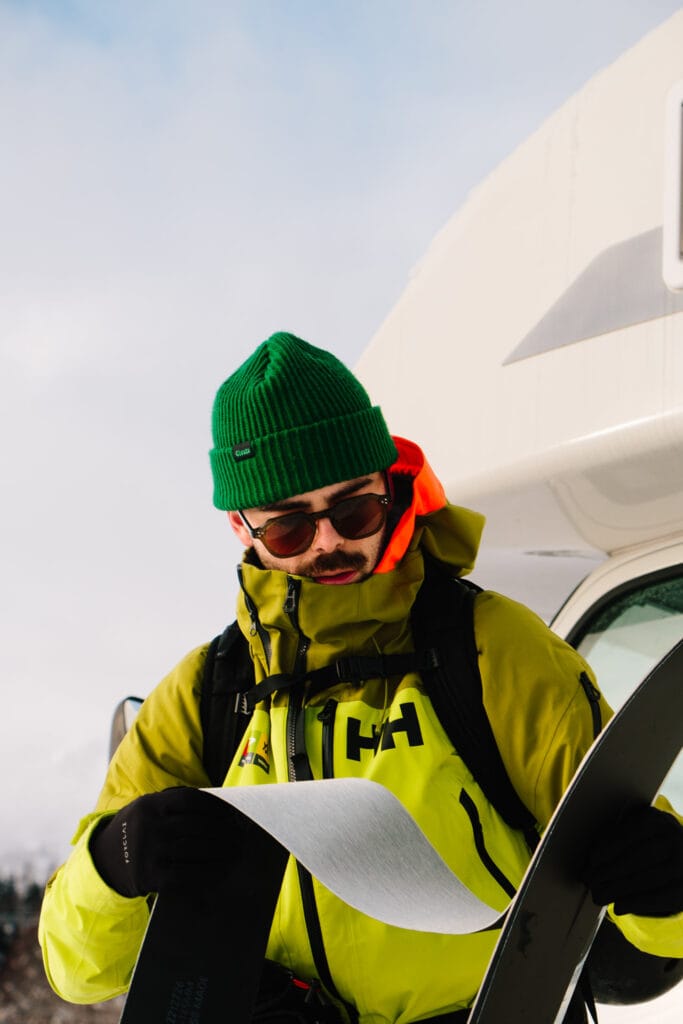
3. Set up our climbing skins
4. Turn on and test our beacons
5. Then we’re OFF!
After breakfast came the following steps, in order or not, depending on whether you are the passenger princess or the driver:
1. Prepare the equipment (another checklist is offered below—I really spoiled you!)
2. Fill the food bag
3. Set up our climbing skins
4. Turn on and test our beacons
5. Then we’re OFF!
The Deep Powder: Ascent and Descent
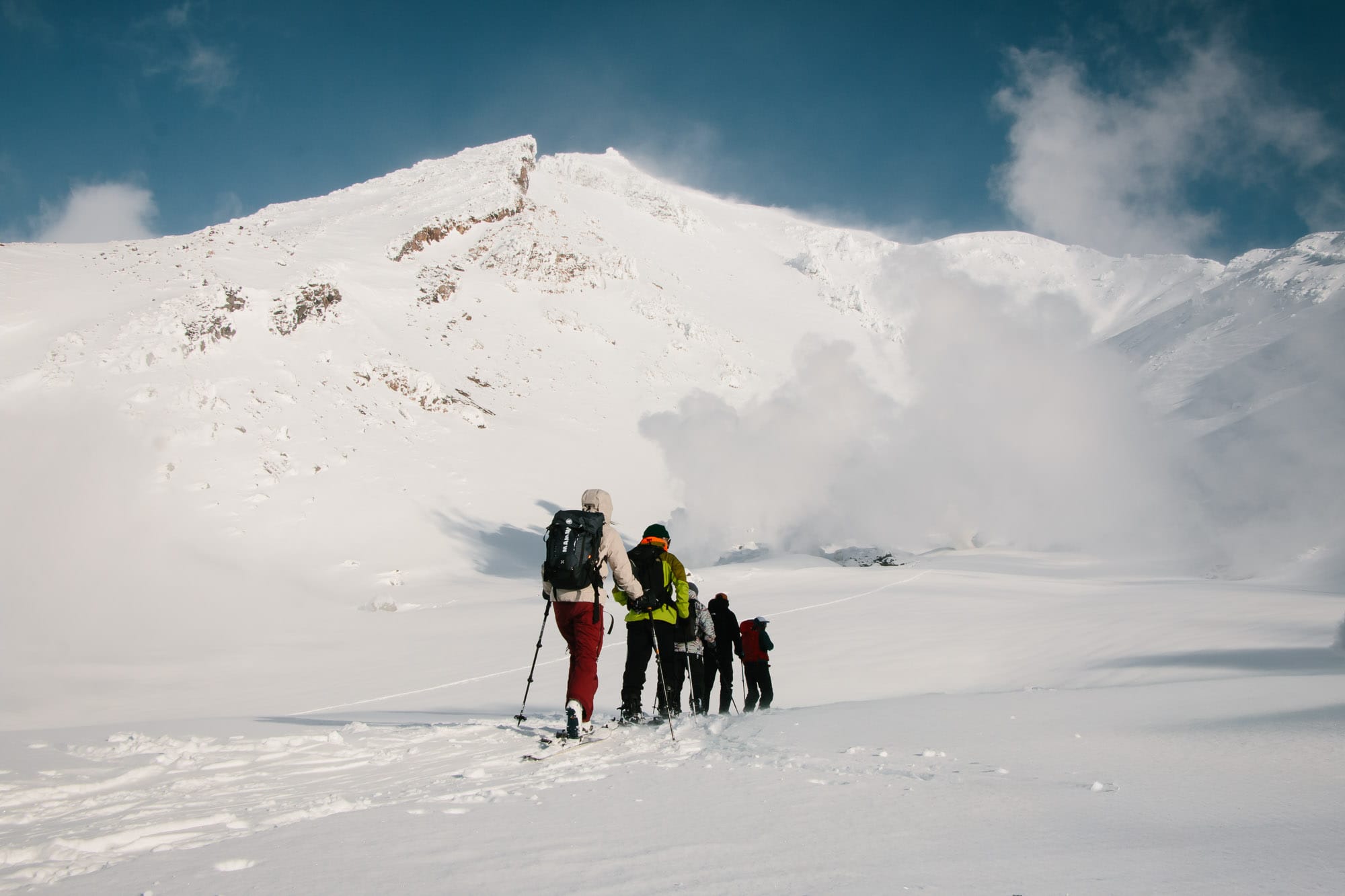
If you want to enjoy the best turns, you have to work your legs! The abundance of snow is, of course, very noticeable on the ascent. It happened quite often that no trail was visible, sometimes covered by the snowfall from previous days. It was therefore necessary to define the path ourselves using our navigation tools. Without exaggeration, the person breaking the skin track easily had mid-thigh deep snow with every stride.
The Deep Powder: Ascent and Descent
If you want to enjoy the best turns, you have to work your legs! The abundance of snow is, of course, very noticeable on the ascent. It happened quite often that no trail was visible, sometimes covered by the snowfall from previous days. It was therefore necessary to define the path ourselves using our navigation tools. Without exaggeration, the person breaking the skin track easily had mid-thigh deep snow with every stride.
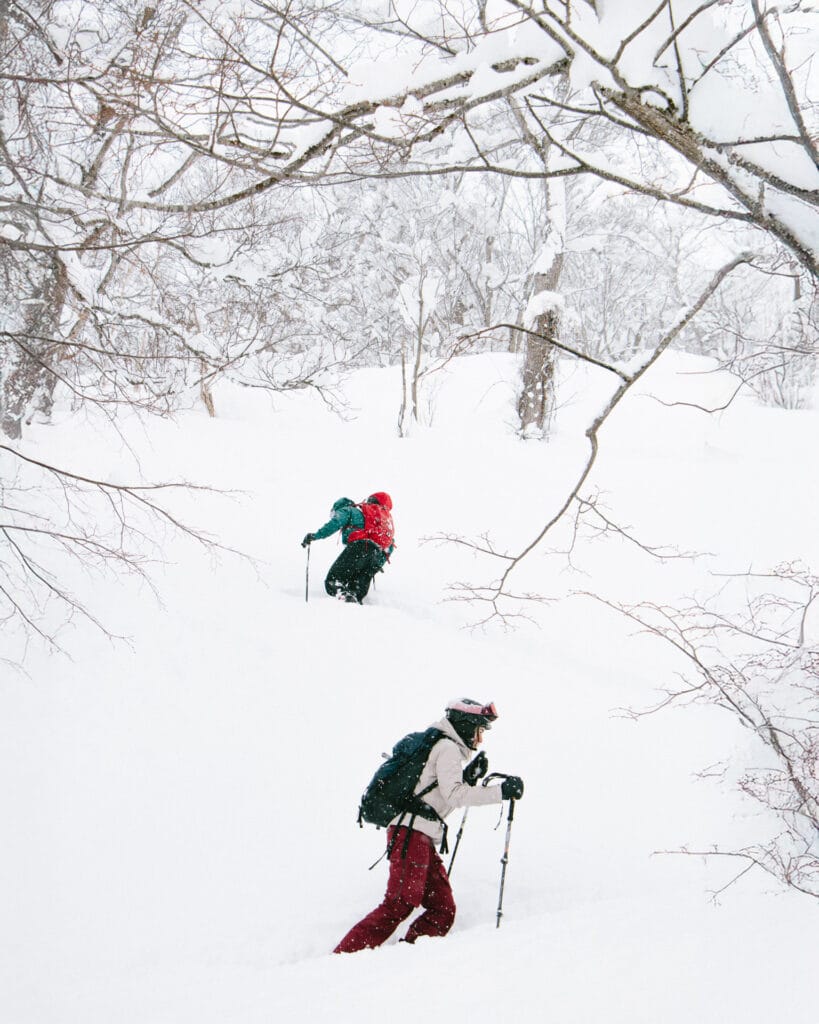
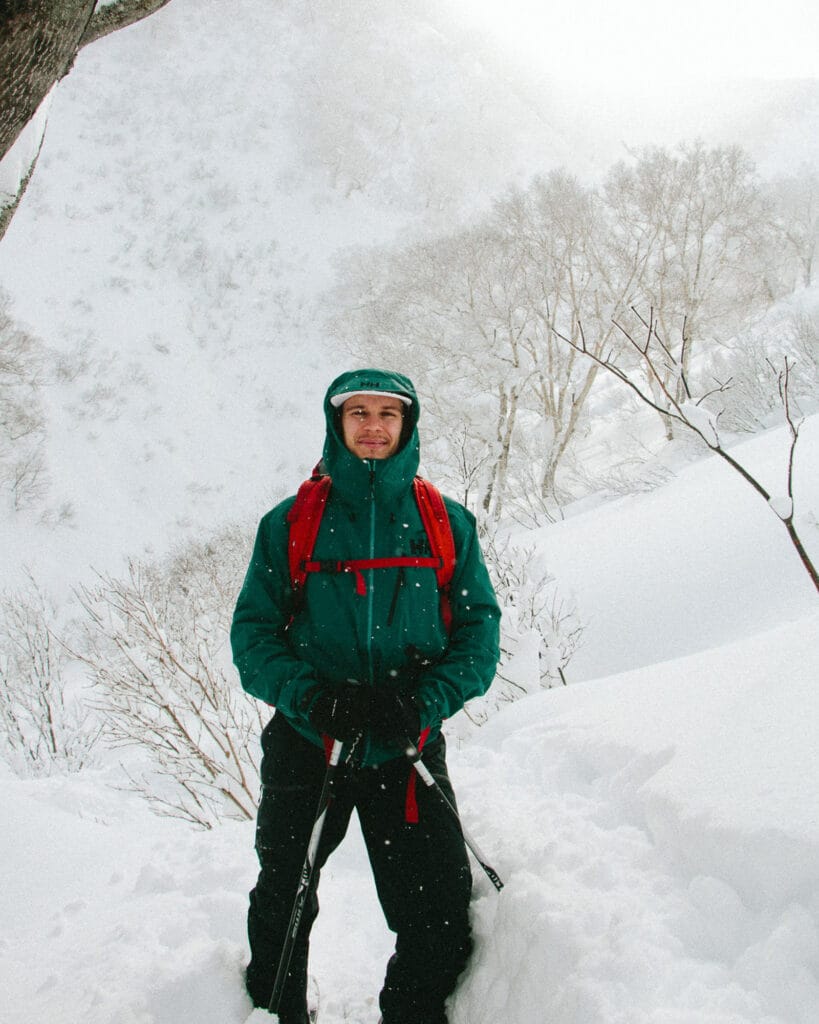
During the transition from the ascent to the descent, we had to stay on our small, packed island, otherwise we could literally sink up to our chests! At the same time, it’s not surprising, as in January in northern Hokkaido there can be up to 4 meters of accumulated powder.
And there we are. Hundreds of hours of planning, travel by plane-bus-shinkansen*-camper, equipment adjustment, and ascent. All of it for this one moment.
The heavy silence of the mountain, breath condensing into thick clouds, the clicking of bindings can be heard, and… the slope opens up. Gravity takes over. You need to build up a bit of speed to finally get that first turn…
During the transition from the ascent to the descent, we had to stay on our small, packed island, otherwise we could literally sink up to our chests! At the same time, it’s not surprising, as in January in northern Hokkaido there can be up to 4 meters of accumulated powder.
And there we are. Hundreds of hours of planning, travel by plane-bus-shinkansen*-camper, equipment adjustment, and ascent. All of it for this one moment.
The heavy silence of the mountain, breath condensing into thick clouds, the clicking of bindings can be heard, and… the slope opens up. Gravity takes over. You need to build up a bit of speed to finally get that first turn…
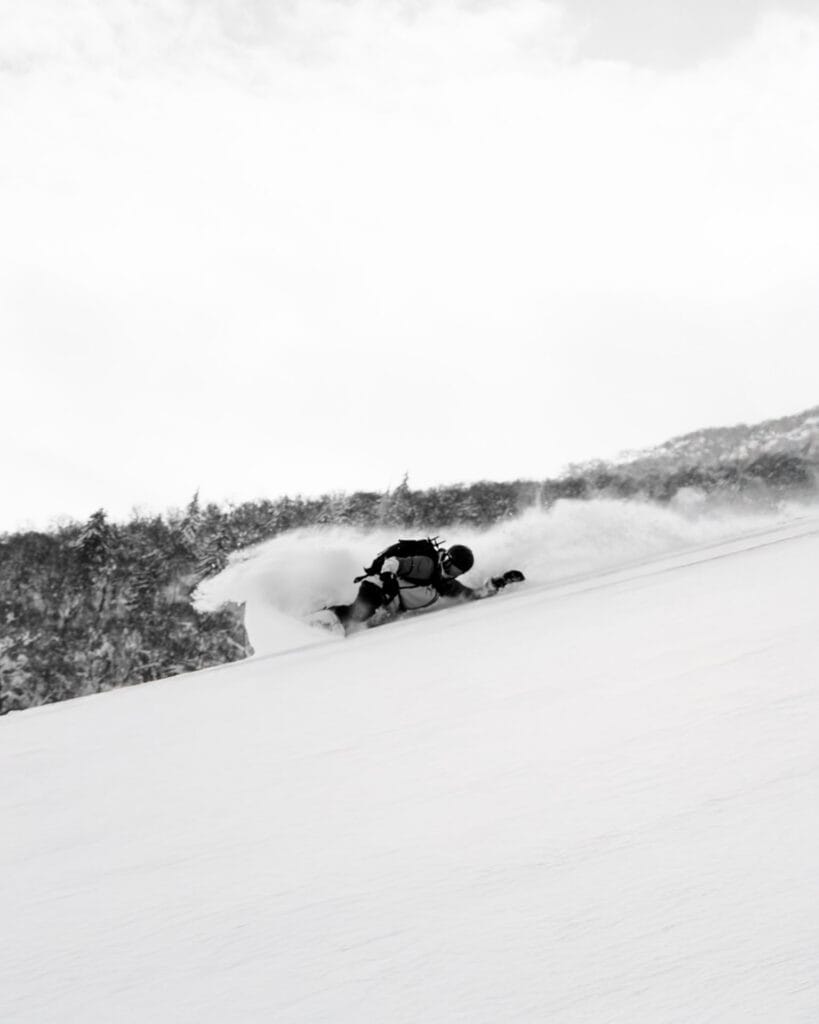
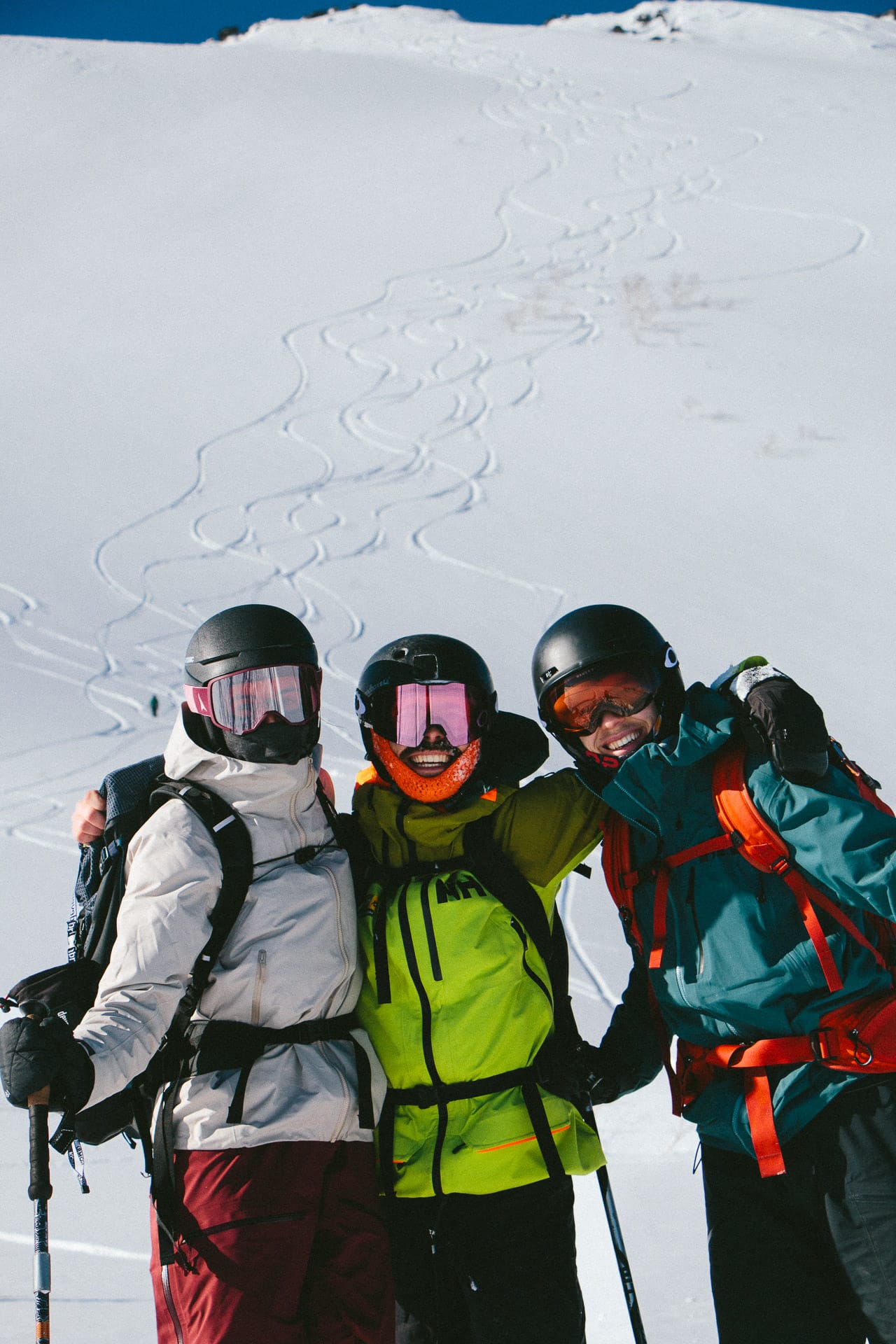
WOW. DAMN. Every turn is a rush of adrenaline straight to the heart! A white cloud above my head, a sensation of floating unique in the world. Nothing comparable.
WOW. DAMN. Every turn is a rush of adrenaline straight to the heart! A white cloud above my head, a sensation of floating unique in the world. Nothing comparable.
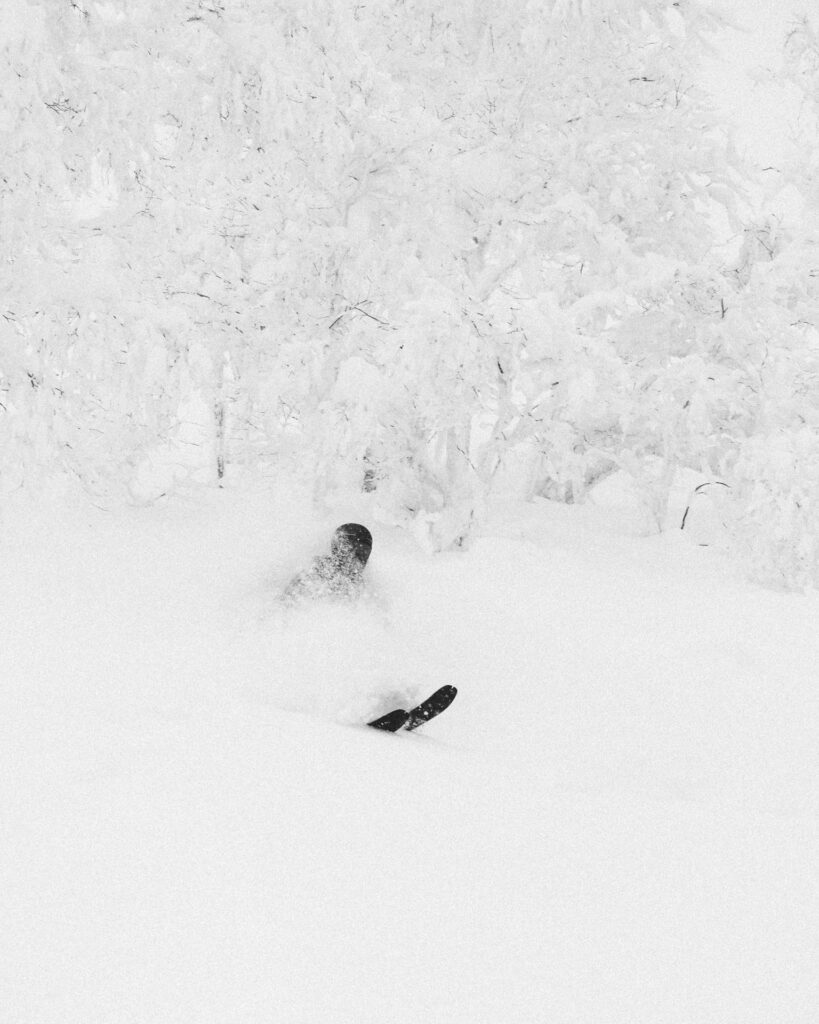
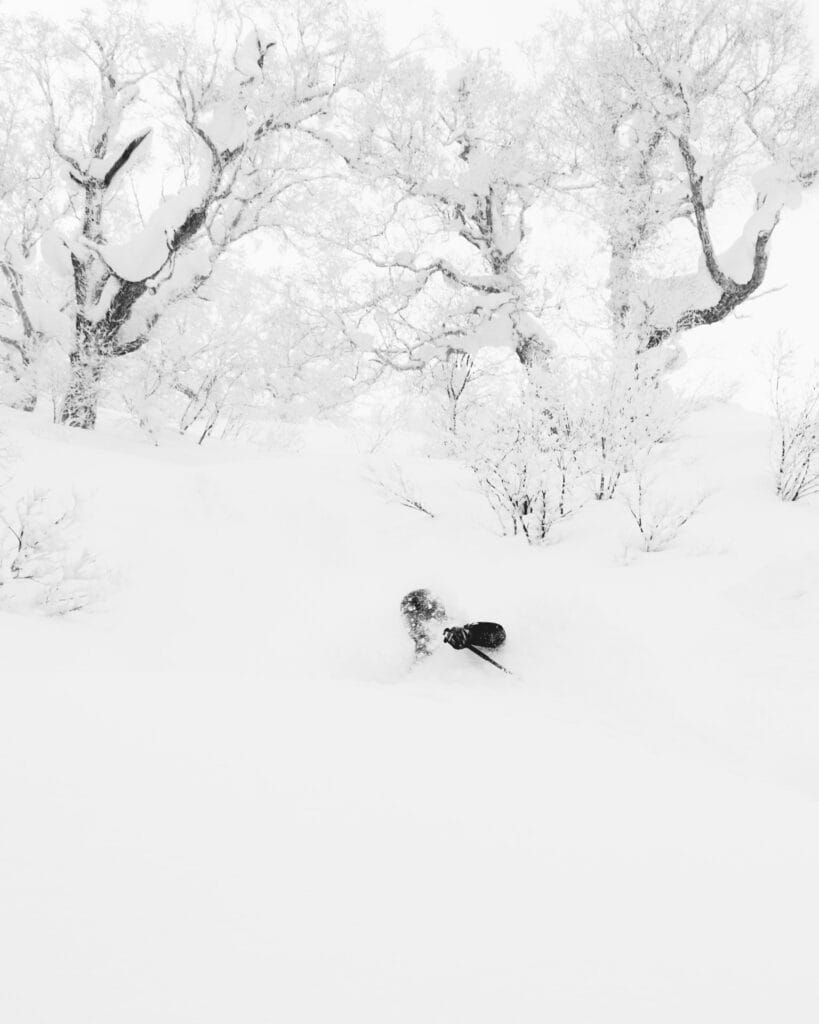
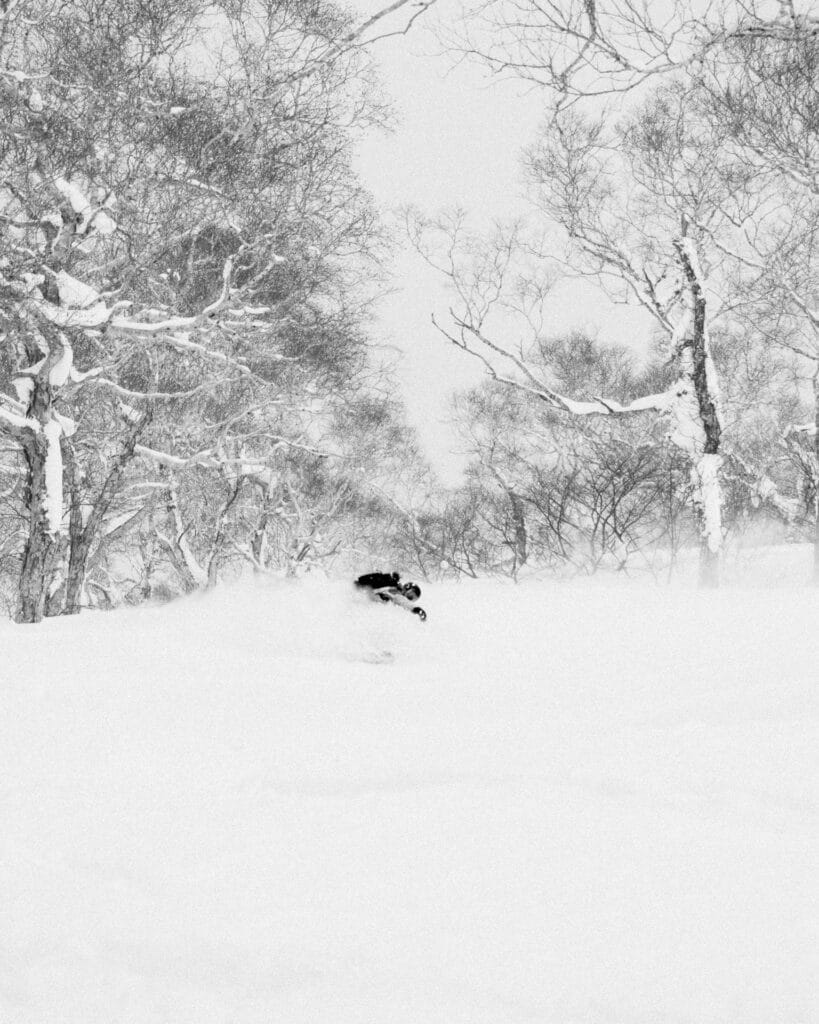
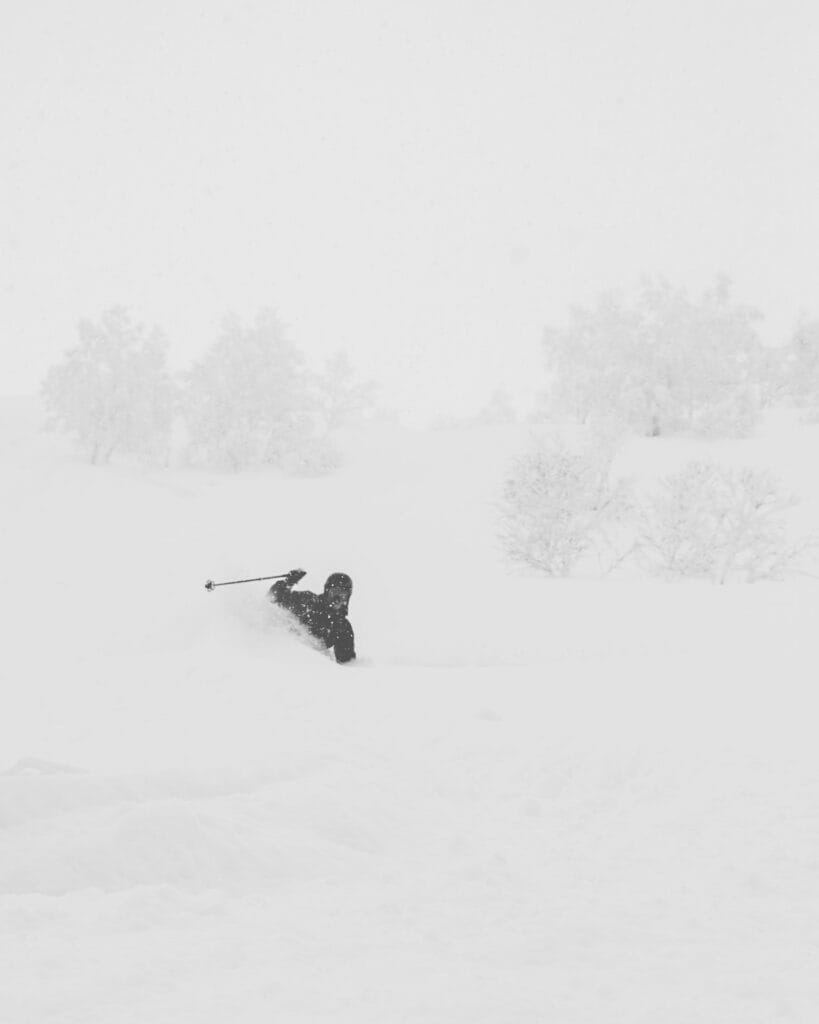
And that’s when you understand what it means to earn your turns. Everything you invested is condensed into a few seconds of pure magic. A feeling of unparalleled satisfaction.
And that’s when you understand what it means to earn your turns. Everything you invested is condensed into a few seconds of pure magic. A feeling of unparalleled satisfaction.
Après-ski
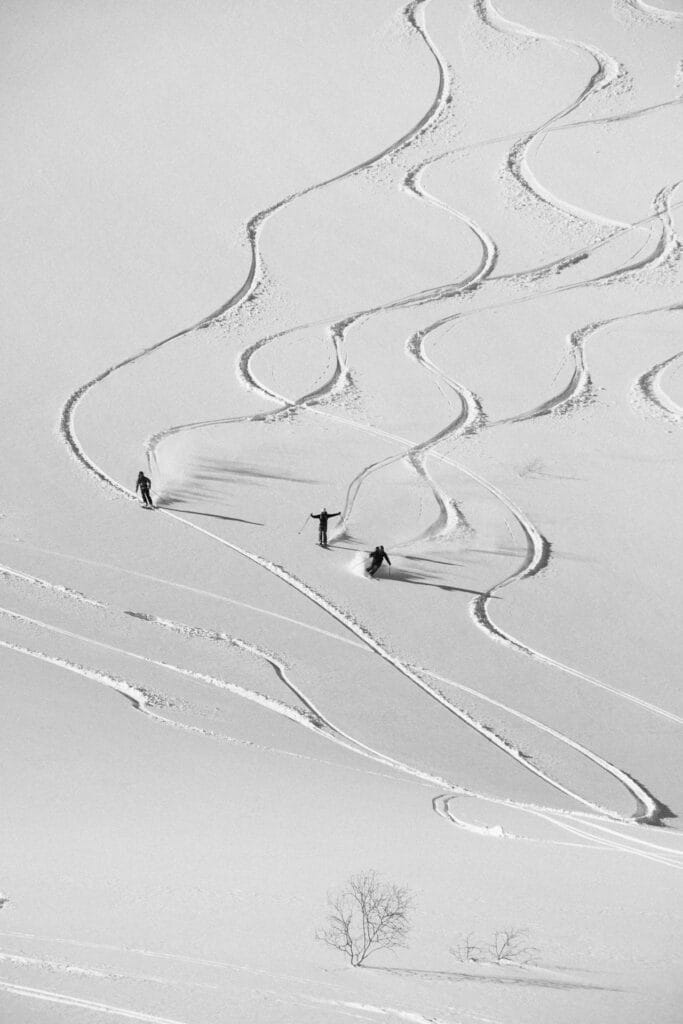
Counter-intuitively, the return via the initial skin track was often more difficult than expected. The numerous valleys made the return to the camper quite tedious… enough to utter an expletive or two. Generally, we aimed to start the descent from the summit no later than 3 PM, to ensure we returned in daylight.
Après-ski
Counter-intuitively, the return via the initial skin track was often more difficult than expected. The numerous valleys made the return to the camper quite tedious… enough to utter an expletive or two. Generally, we aimed to start the descent from the summit no later than 3 PM, to ensure we returned in daylight.
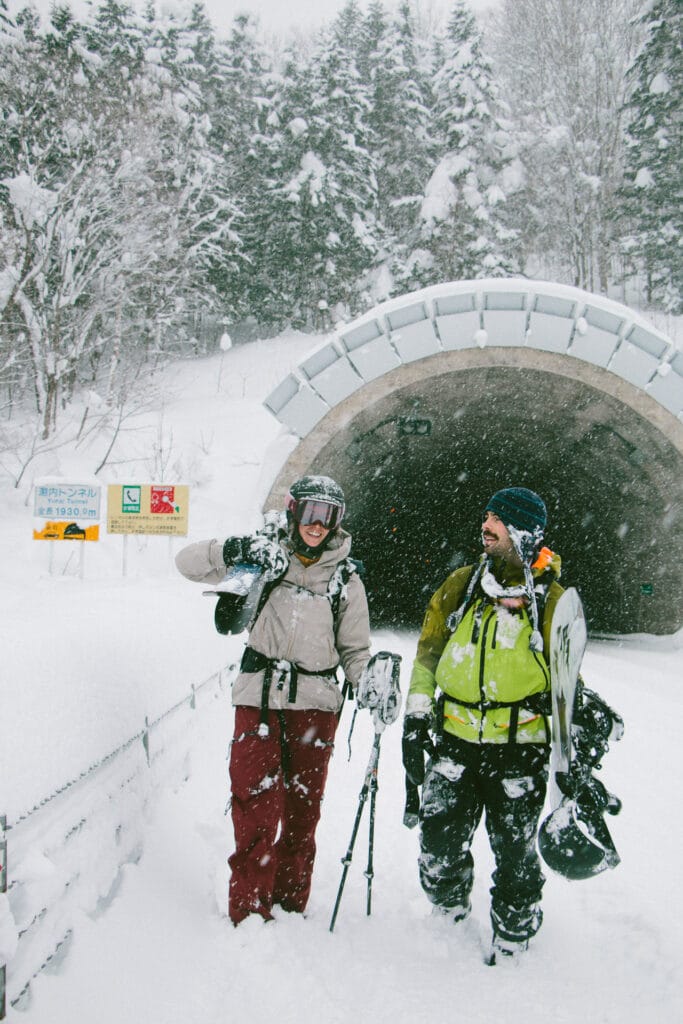
Back at the camper, it wasn’t long before we heard the first psshhht. The sound of happiness of that sweet, hoppy liquid soon in our throats, KANPAI TABAR**K! So satisfying; an ice-cold beer after 1,000 meters of vertical gain in Japanese powder.
he perfect combo: getting back to warmth, food, a Sapporo or Asahi, and our infamous Spotify playlist!
Back at the camper, it wasn’t long before we heard the first psshhht. The sound of happiness of that sweet, hoppy liquid soon in our throats, KANPAI TABAR**K! So satisfying; an ice-cold beer after 1,000 meters of vertical gain in Japanese powder.
he perfect combo: getting back to warmth, food, a Sapporo or Asahi, and our infamous Spotify playlist!
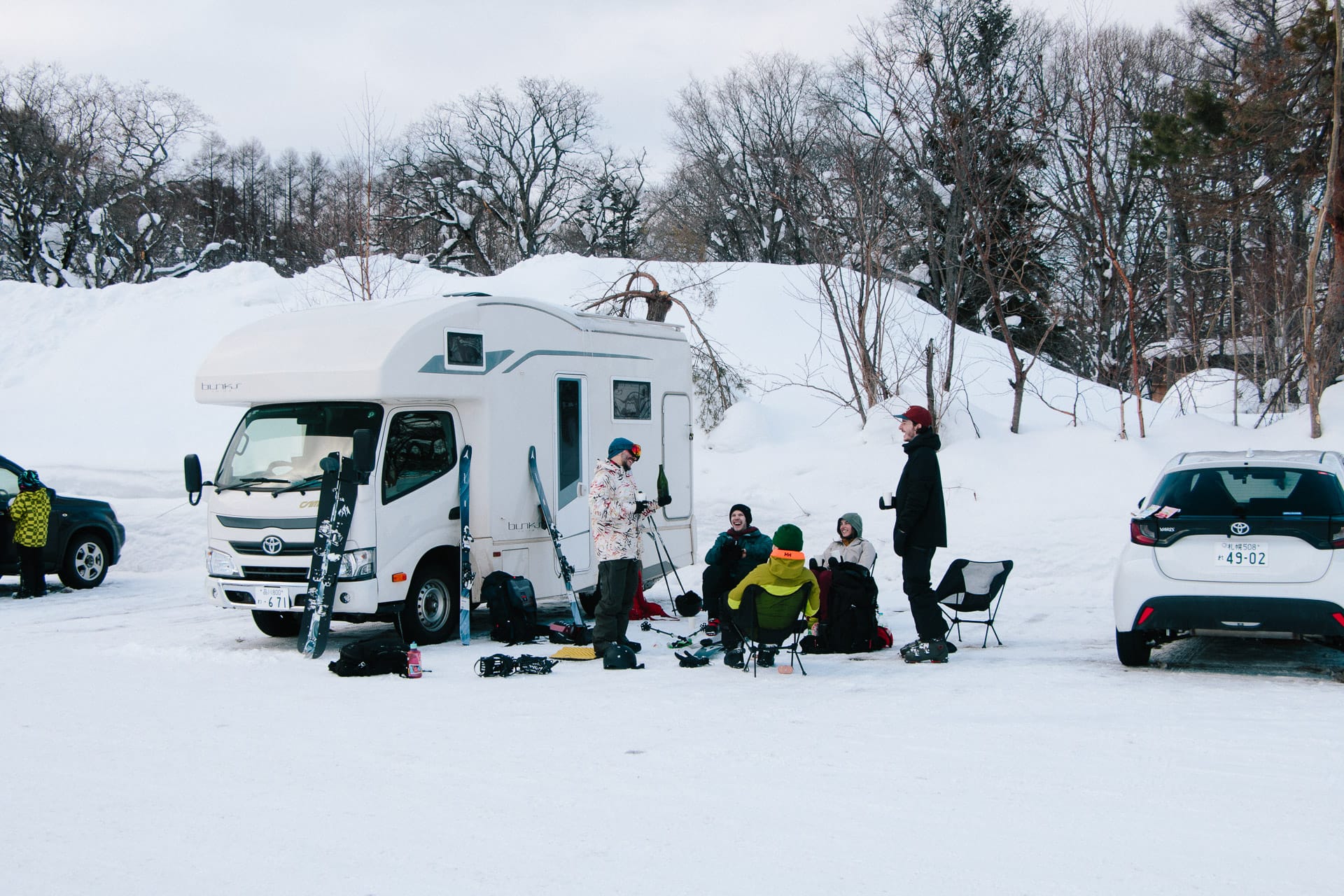
This break kicked off what I liked to call our « first dinner, » which, in my case, was a copy-paste of my breakfast. One thing is for sure: at my 145 pounds, I would have been able to eat an entire tuna at 4 PM!
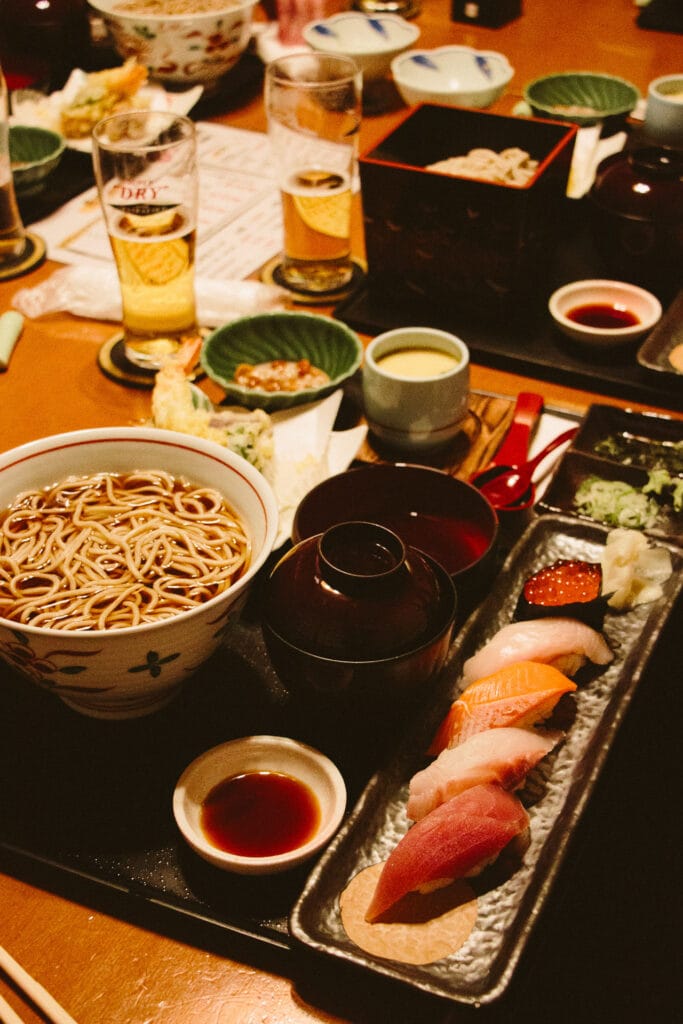
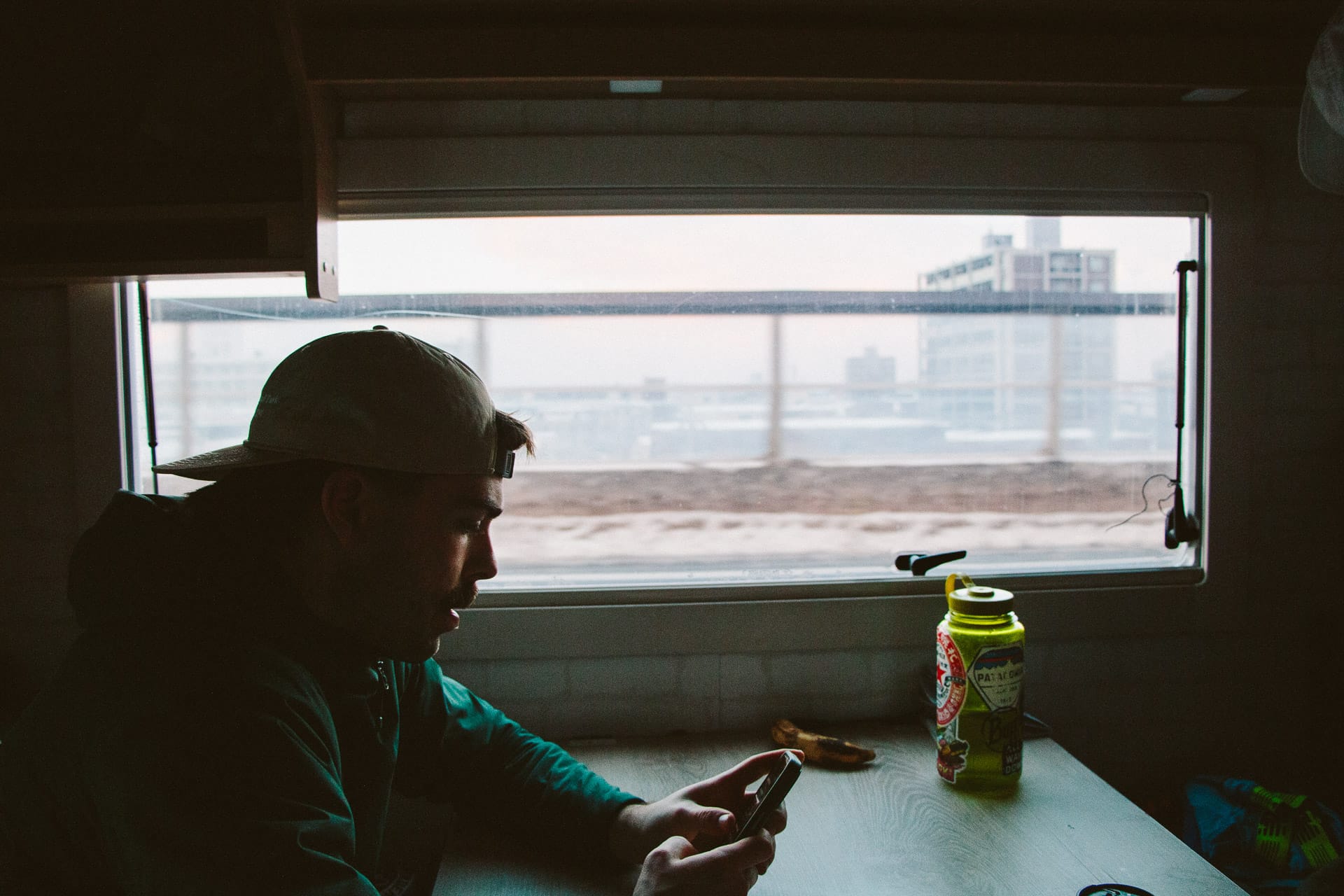
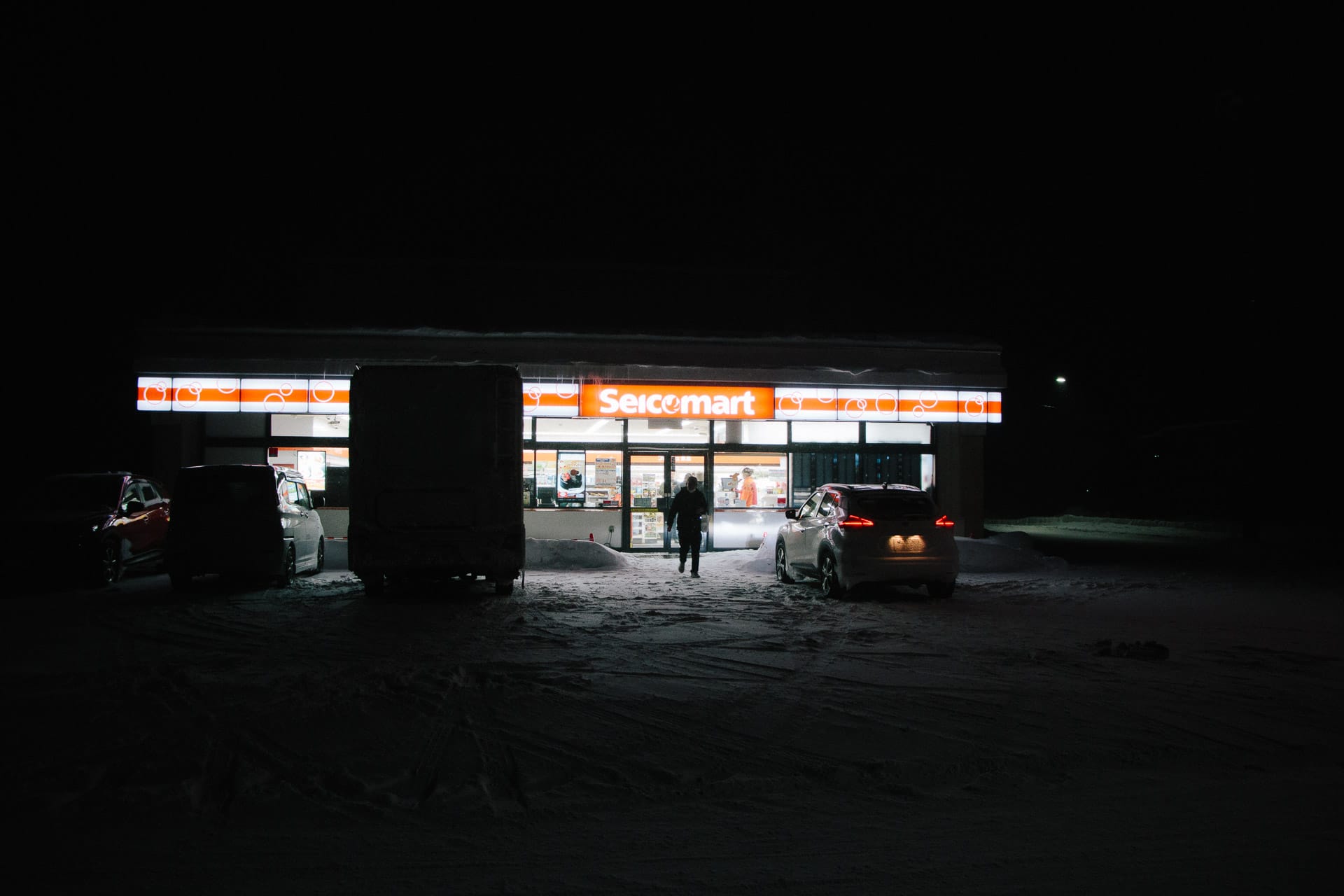
After a short drive in the camper, the cycle started again: onsen, a little local restaurant, an essential stop at the konbini* for the next day’s onigiris*, planning, then camper-sleep. And we start over. A bit crazy, yes, but the process was worth every drop of sweat. In the end, those turns are priceless.
This break kicked off what I liked to call our « first dinner, » which, in my case, was a copy-paste of my breakfast. One thing is for sure: at my 145 pounds, I would have been able to eat an entire tuna at 4 PM!
After a short drive in the camper, the cycle started again: onsen, a little local restaurant, an essential stop at the konbini* for the next day’s onigiris*, planning, then camper-sleep. And we start over. A bit crazy, yes, but the process was worth every drop of sweat. In the end, those turns are priceless.
So, what are you waiting for? Text your 2-3 best friends and start planning your own Japow trip! The trip starts long before you even touch the snow.
So, what are you waiting for? Text your 2-3 best friends and start planning your own Japow trip! The trip starts long before you even touch the snow.
Hokkaido Touring Checklists
1. Digital Planning Tools
Hokkaido Wilds: Legitimately the essential resource for planning a backcountry outing in Japan. You can quickly locate interesting mountains in all the main regions of the island and consult their detailed technical sheets: access, vertical gain, itinerary, landmarks, and specific risks. You can find downloadable GPX files there, which are super practical to import into a navigation app to follow your route in the field. In short, a must for touring on Hokkaido.
Windy: This is the interactive weather app that displays temperature, precipitation, wind, and snow accumulation in real-time on animated maps. Basically, it’s a Weather Channel on steroids. You use it primarily before and during the outing (if there is cell service) to anticipate snowfall, spot temperature variations, and monitor wind events. This essential information helps judge the stability of the snowpack and adapt your outing plan.
Japan Avalanche Network (JAN): The official platform dedicated to avalanche conditions in Japan (use the Google translate tool to easily consult it ;). You’ll find regional avalanche bulletins, updated regularly, with the danger level (1 to 5), dominant problems (slabs, wet snow, etc.), and field observations. By checking the site before your outing, you can better assess the risk and decide whether to attack that mountain segment… or play it safe and choose another one!
OnX Backcountry: This is a mobile mapping application designed for outdoor sports. You can plan your itinerary, visualize avalanche slopes using terrain layers, and use it even offline. By downloading maps and the GPX files retrieved from Hokkaido Wilds in advance, you can follow your route directly in the field without a connection (really, really handy when you’re lost). It’s your best ally for staying on track and adjusting your progress according to real conditions.
Hokkaido Touring Checklists
1. Digital Planning Tools
Hokkaido Wilds: Legitimately the essential resource for planning a backcountry outing in Japan. You can quickly locate interesting mountains in all the main regions of the island and consult their detailed technical sheets: access, vertical gain, itinerary, landmarks, and specific risks. You can find downloadable GPX files there, which are super practical to import into a navigation app to follow your route in the field. In short, a must for touring on Hokkaido.
Windy: This is the interactive weather app that displays temperature, precipitation, wind, and snow accumulation in real-time on animated maps. Basically, it’s a Weather Channel on steroids. You use it primarily before and during the outing (if there is cell service) to anticipate snowfall, spot temperature variations, and monitor wind events. This essential information helps judge the stability of the snowpack and adapt your outing plan.
Japan Avalanche Network (JAN): The official platform dedicated to avalanche conditions in Japan (use the Google translate tool to easily consult it ;). You’ll find regional avalanche bulletins, updated regularly, with the danger level (1 to 5), dominant problems (slabs, wet snow, etc.), and field observations. By checking the site before your outing, you can better assess the risk and decide whether to attack that mountain segment… or play it safe and choose another one!
OnX Backcountry: This is a mobile mapping application designed for outdoor sports. You can plan your itinerary, visualize avalanche slopes using terrain layers, and use it even offline. By downloading maps and the GPX files retrieved from Hokkaido Wilds in advance, you can follow your route directly in the field without a connection (really, really handy when you’re lost). It’s your best ally for staying on track and adjusting your progress according to real conditions.
2. Equipment to Prepare
The Mandatory Trio (Avalanche Safety Kit)
– Beacon: Avalanche Transceiver. You wear it under your jacket, close to your body. It sends a signal to be found or picks up others’ signals. Before every departure, test it with your group: turn it on, check that everyone is transmitting, then switch back to transmit mode.
– Probe: A telescoping rod that deploys quickly to locate a buried victim. Used after picking up a signal with the beacon, it helps confirm the exact position before starting to shovel.
– Shovel: Robust and lightweight, designed to dig efficiently through compact snow. It makes the difference in the time it takes to clear a victim. It must always be inside your bag, never attached to the outside.
Important: A recognized avalanche course (e.g., Avy Level 1) is essential to know how to use these tools. When an accident occurs, you don’t have time to improvise: every second counts!
And the Rest
– Phone and External Battery: Your phone remains your main communication and navigation tool, but the battery life drops quickly in the cold, especially old iPhones lol. It is therefore important to plan for an external charge.
– Helmet: I can’t believe we need to repeat this, but seriously, head injuries don’t just happen to other people. Wear your helmet.
– Technical Clothing: Multi-layers adapted to the conditions (base layer, puffy jacket, shell). Also think about spare items, like an extra pair of mittens.
– Hydration and Nutrition: Water, electrolytes, energy bars, and always a little extra in case the outing is longer than planned. In Japan, it’s the perfect opportunity to eat raw fish on the mountain!
– First Aid Kit: Compresses, bandages, wraps, anti-inflammatories, survival blanket, whistle, multi-tool knife, headlamp.
Small Japanese Lexicon
– Hokkaido (北海道): The northernmost island of Japan, renowned for its endless winters and phenomenal amount of snow.
– Japow: Contraction of Japan + Powder, the Western term for Japan’s legendary powder snow.
– Kanpai (乾杯): Japanese « cheers. »
– Konbini (コンビニ): 24/7 convenience store (notably the famous 7-Eleven) where you can find everything from famous Japanese whiskey to ready-to-eat meals.
– Michi-no-eki (道の駅): Japanese roadside rest areas. Perfect for parking a camper, eating, drinking, and sleeping.
– Onigiri (おにぎり): Rice balls filled with fish (salmon, tuna mayo, umeboshi) wrapped in a sheet of seaweed—lowkey the perfect snack for reviving tired legs.
– Onsen (温泉): Traditional hot baths, fed by volcanic thermal springs. You bathe there naked, chat, and, most importantly, you’re not sore the next day.
– Shinkansen (新幹線): Japanese high-speed train, a symbol of speed and punctuality. Seriously, the drivers will come out and apologize if the train is even a few seconds late!
2. Equipment to Prepare
The Mandatory Trio (Avalanche Safety Kit)
– Beacon: Avalanche Transceiver. You wear it under your jacket, close to your body. It sends a signal to be found or picks up others’ signals. Before every departure, test it with your group: turn it on, check that everyone is transmitting, then switch back to transmit mode.
– Probe: A telescoping rod that deploys quickly to locate a buried victim. Used after picking up a signal with the beacon, it helps confirm the exact position before starting to shovel.
– Shovel: Robust and lightweight, designed to dig efficiently through compact snow. It makes the difference in the time it takes to clear a victim. It must always be inside your bag, never attached to the outside.
Important: A recognized avalanche course (e.g., Avy Level 1) is essential to know how to use these tools. When an accident occurs, you don’t have time to improvise: every second counts!
And the Rest
– Phone and External Battery: Your phone remains your main communication and navigation tool, but the battery life drops quickly in the cold, especially old iPhones lol. It is therefore important to plan for an external charge.
– Helmet: I can’t believe we need to repeat this, but seriously, head injuries don’t just happen to other people. Wear your helmet.
– Technical Clothing: Multi-layers adapted to the conditions (base layer, puffy jacket, shell). Also think about spare items, like an extra pair of mittens.
– Hydration and Nutrition: Water, electrolytes, energy bars, and always a little extra in case the outing is longer than planned. In Japan, it’s the perfect opportunity to eat raw fish on the mountain!
– First Aid Kit: Compresses, bandages, wraps, anti-inflammatories, survival blanket, whistle, multi-tool knife, headlamp.
Small Japanese Lexicon
– Hokkaido (北海道): The northernmost island of Japan, renowned for its endless winters and phenomenal amount of snow.
– Japow: Contraction of Japan + Powder, the Western term for Japan’s legendary powder snow.
– Kanpai (乾杯): Japanese « cheers. »
– Konbini (コンビニ): 24/7 convenience store (notably the famous 7-Eleven) where you can find everything from famous Japanese whiskey to ready-to-eat meals.
– Michi-no-eki (道の駅): Japanese roadside rest areas. Perfect for parking a camper, eating, drinking, and sleeping.
– Onigiri (おにぎり): Rice balls filled with fish (salmon, tuna mayo, umeboshi) wrapped in a sheet of seaweed—lowkey the perfect snack for reviving tired legs.
– Onsen (温泉): Traditional hot baths, fed by volcanic thermal springs. You bathe there naked, chat, and, most importantly, you’re not sore the next day.
– Shinkansen (新幹線): Japanese high-speed train, a symbol of speed and punctuality. Seriously, the drivers will come out and apologize if the train is even a few seconds late!
Author: Jacob Lajoie
Photographer: Laurent Auchu
Author: Jacob Lajoie
Photographer: Laurent Auchu

About the author
A true snowboarder at heart since a young age, Jacob particularly enjoys combining his passion for snowboarding with his love for travel and, to be completely honest, with the practice of all the other sports that make his mother roll her eyes. His motto: what’s the point of living the greatest adventure if it can’t be told? He begins, alongside his partner Laurent in photography, to write about their adventures. Accompanied by the photos, these stories bring to life memories from Hokkaido and the Japanese Alps, Gaspésie, Lac St-Jean, Old Québec City, and much more!
About the author
A true snowboarder at heart since a young age, Jacob particularly enjoys combining his passion for snowboarding with his love for travel and, to be completely honest, with the practice of all the other sports that make his mother roll her eyes. His motto: what’s the point of living the greatest adventure if it can’t be told? He begins, alongside his partner Laurent in photography, to write about their adventures. Accompanied by the photos, these stories bring to life memories from Hokkaido and the Japanese Alps, Gaspésie, Lac St-Jean, Old Québec City, and much more!